
Polypropylene Modular Rainwater Harvesting

  • Home
  • Polypropylene Modular Rainwater Harvesting
Polypropylene Modular Rainwater Harvesting
Modular Underground Storage and Recharge Blocks

Polypropylene Modular Rainwater Harvesting

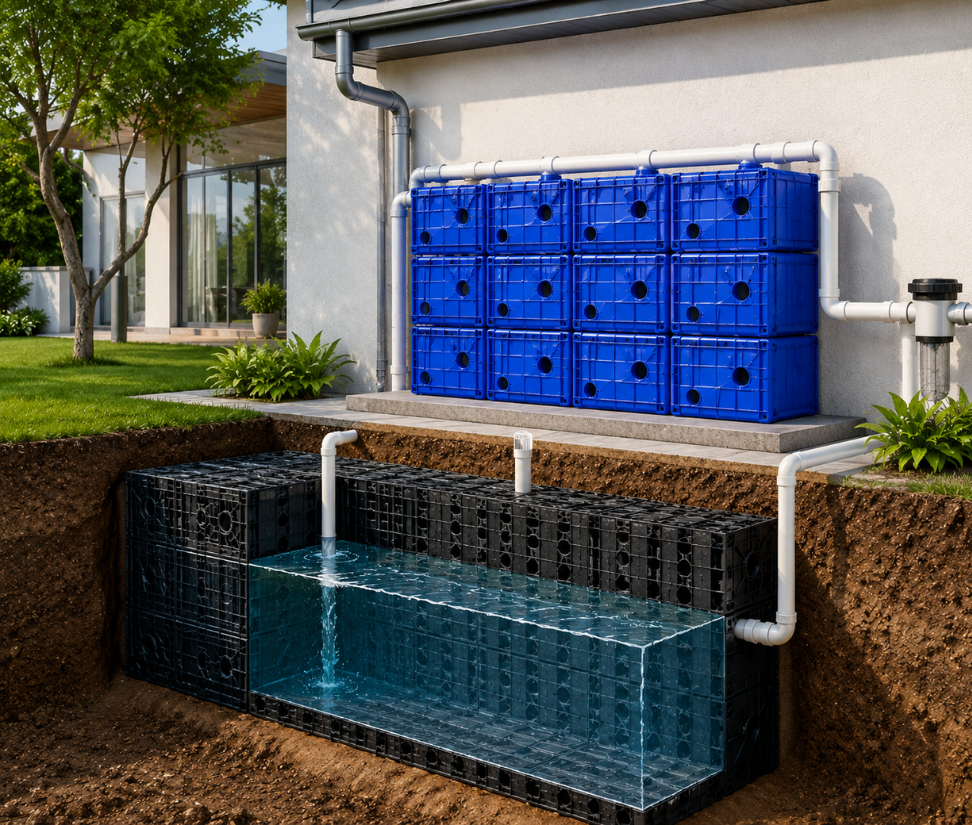
Polypropylene Modular Rainwater Harvesting uses lightweight modular blocks to create underground water storage or recharge structures with high void space and strong load-bearing design.

These modular systems are useful where quick installation, efficient water holding capacity, and flexible underground layout are required.

They are suitable for residential layouts, commercial projects, landscaping zones, industrial premises, institutions, and sites where traditional concrete storage is not preferred.

Working Process

How Our System Works

01

Layout Planning

The module capacity and underground layout are planned according to runoff volume and site space.

02

Excavation

The area is excavated and prepared with the required base layer and protection membrane.

03

Module Assembly

Polypropylene modules are assembled to form the required storage or recharge structure.

04

Connection & Backfill

Inlet, outlet, overflow, and inspection points are connected before backfilling and testing.

Why Choose Polypropylene Modular RWH?
  • High void storage capacity
  • Fast installation
  • Flexible modular design
  • Lightweight structure
  • Underground space saving
  • Suitable for modern projects
Benefits of Polypropylene Modular RWH
  • Efficient stormwater control
  • Supports reuse or recharge
  • Reduces surface waterlogging
  • Scalable capacity
  • Clean underground layout
  • Long service life

Some FAQ About This Service

They are used to create underground rainwater storage or recharge structures with high water holding capacity.

Yes, it is suitable for commercial complexes, institutions, societies, industrial sites, and landscaping areas.

Yes, the modular design allows capacity to be scaled according to runoff and space requirements.

In many cases, modular systems can be used as an alternative to traditional concrete storage or recharge structures.

Yes, inspection and maintenance access points can be planned during installation.